This easy-to-understand summary is suited for students and language learners. The content has been condensed and scientific references have been omitted. The full context can be found in the complete version in standard language →
Using Old Materials Instead of New Ones
The Undervalued Resource of the Existing Building Stock
Every year in Europe, about 900 million tonnes of material gets thrown away when buildings are torn down. Most of it gets crushed and used as cheap fill under roads—but a lot of it is actually still good. Old wood beams, bricks, roof tiles, stairs, and steel could all be used again in new buildings, at a much lower price than buying new materials.
The smarter way to tear down a building is to do it carefully, piece by piece, so the parts stay in good condition. This takes more time, but the materials you save are worth more than the extra effort. In countries like the Netherlands and Belgium, used roof tiles can cost 20–50% less than new ones, and used wood beams can cost 40–70% less.
One big problem is that buyers don’t know what used materials are available. A possible fix is “digital passports” for building parts—basically records that say what something is made of, how strong it is, and how old it is. If every building part had one of these records, it would be much easier to find and buy used materials.
Converting old offices into homes is another smart option. Instead of building from scratch, you take an empty office building and turn it into apartments. The walls and structure are already there, so you skip 30–40% of the usual building costs. Projects in London, Amsterdam, and Paris have shown this can be 15–35% cheaper than building new.
Changing How the Work Gets Done
Building companies often say there aren’t enough skilled workers—but the real issue is that the work isn’t organized well. If more of the building is made in a factory instead of on-site, then less of the work requires highly trained tradespeople. Factory work is also more precise and wastes less.
Community building is another powerful idea. In Germany and Austria, groups of future residents build their own homes together, with professional guidance. Because they do much of the work themselves, they save on contractor fees and developer profits—which normally add 25–40% to the price. These community projects often come in 30–50% cheaper than regular construction.
A middle-ground approach is to hire professionals for the tricky structural work, and let future residents handle the simpler finishing tasks like painting and landscaping.
Buying together is also a way to save. If several housing companies or towns join forces and order construction services as a group, they can get 10–20% discounts—just like buying in bulk at a supermarket.
Fixing the Rules and Systems
Long delays in getting building permits are expensive. If a developer is paying interest on a loan while waiting 12 months for permission to start, that can add over €1 million in costs before any work begins. Making the approval process faster and more predictable would directly lower housing costs.
The Big Picture
Homes in Europe could be built for 30–50% less using methods that already exist—no need to wait for new technology. The main barriers are not technical—they’re about how the industry is organized and how governments make rules.
The key question is: why do we still build houses one at a time, on-site, when almost everything else is made more efficiently in factories? Why do we assume demolition has to be destructive, when careful dismantling could recover valuable materials cheaply? And why are future residents treated as passive buyers rather than active participants in building their own homes?
These aren’t technically hard questions. They’re organizationally and politically hard—which is exactly why they’re worth asking.
A Note on the Architect
Putting these ideas into practice requires an architect who understands not just design but also costs, procurement, and how buildings actually get built. Ansgar Halbfas brings this from working in China—where construction is fast, practical, and results-driven—and in the US, where architects are expected to be direct about value and not hide behind process. Combined with a Central European design background, this makes him well suited to the challenge of building better homes for less.
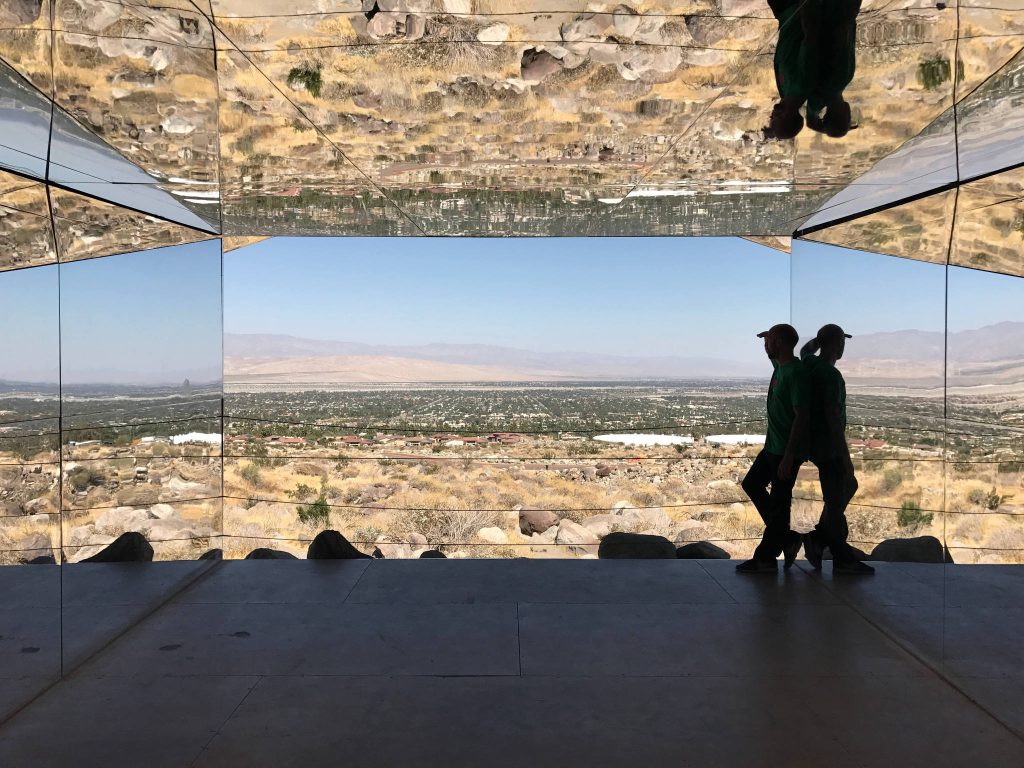
Ansgar Halbfas leading a guided architectural tour in Palm Springs, USA.