Ever feel like the typical career paths are a bit… 20th century? If you’re looking at the world and seeing opportunities that don’t have a “major” at a traditional university yet, you’ve come to the right place.
The list below isn’t just a collection of buzzwords; it’s a map of where the world is heading. Whether you want to build the digital ethics of tomorrow or get your hands dirty in a neighborhood food forest, these roles represent the next frontier of work.
How We Help You Get There
Full disclosure: We don’t hand out degrees, and we don’t have a magic “apply here” button for these specific roles. What we do offer is a serious, dedicated coaching partnership. Think of us as your navigational system for uncharted territory. Transitioning into these specialized fields requires more than just a resume—it requires a strategy, a mindset shift, and a network. Because our support is highly personalized and professional, we do charge for our services. In return, you get expert guidance to bridge the gap between “that sounds cool” and “this is my career.”
Curiosity Without Limits
Why pick just one box? The future doesn’t happen in a vacuum, and the most exciting careers of tomorrow usually sit right at the intersection of different worlds. Perhaps you are an AI enthusiast with a passion for soil biology, or a designer who cares deeply about cybersecurity. We encourage you to select all the fields that spark your curiosity. Don’t worry about being “focused” yet—that’s what our coaching is for. The more we know about what excites you, the better we can help you weave those diverse interests into a career path that is as unique as you are:
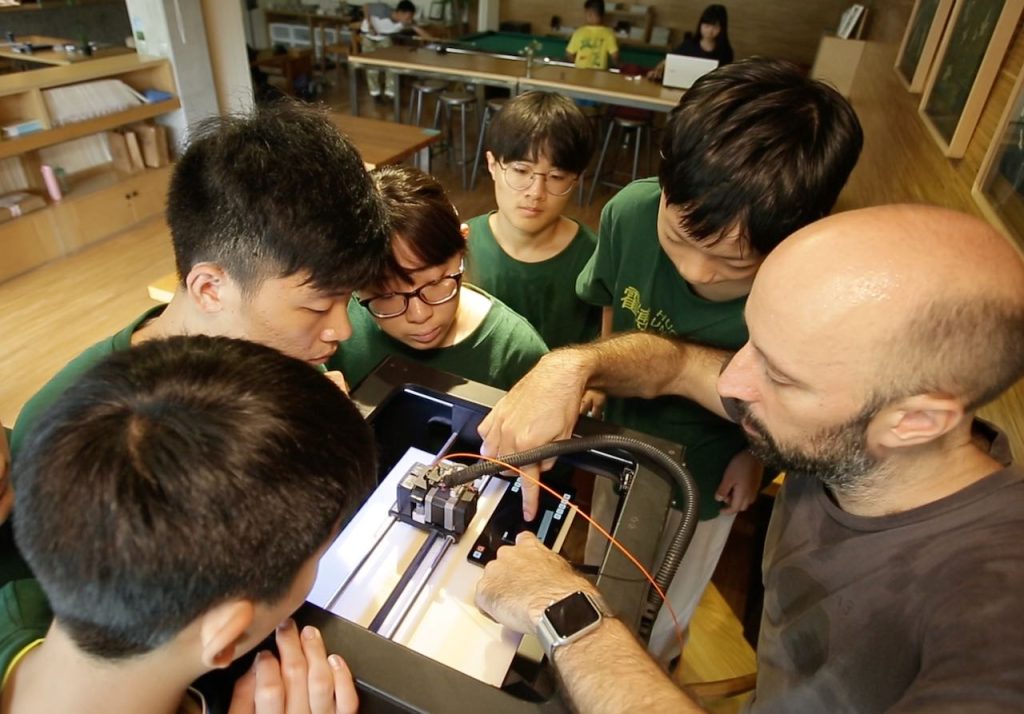
Summer school program conceived and facilitated by the House of Sciences apprenticeship board.
Effective Education Styles for Apprenticeships and Internships: A Scientific Overview
The Core Framework: Cognitive Apprenticeship
The most scientifically grounded model for apprenticeship and internship education is Cognitive Apprenticeship, first formalized by Collins, Brown, and Newman (1989) and later elaborated by Collins, Brown, and Holum (1991). Unlike traditional apprenticeship—which involves learning a physical, tangible activity by watching and assisting an expert—cognitive apprenticeship is a model of instruction designed to make thinking visible, since the mental processes involved in problem-solving are largely invisible to both students and teachers (Collins et al., 1991). The framework is built around four design dimensions: content, method, sequencing, and sociology.
Cognitive apprenticeship reflects a broader tradition of situated learning theory, which holds that cognition is fundamentally a social activity and that knowledge is embedded in the contexts in which it is produced and used (Lave & Wenger, 1991). Learners move toward full participation in the sociocultural practices of a community—what Lave and Wenger (1991) call legitimate peripheral participation.
What the Science Says Works
1. Modeling, Scaffolding, and Guided Practice
Research synthesized by Hattie (2009) shows that scaffolding yields an effect size of d = 0.82 on student achievement—well above his hinge point of d = 0.4 for meaningful impact. Deliberate practice (d = 0.79) and feedback (d = 0.70–0.73) round out the most effective instructional triad. The core of cognitive apprenticeship involves six processes that teachers and mentors use to promote learning: modeling, coaching, scaffolding, articulation, reflection, and exploration (Collins et al., 1991).
2. Authentic, Real-World Tasks
The “learning by doing” model is globally supported as a bridge between education and work. Hora et al. (2020) found that attention to authentic work design—not merely the presence of an internship—is central to outcomes. Research on experiential education more broadly demonstrates that applying knowledge in authentic, real-world settings, with all their contextual unpredictability, produces deeper and more flexible learning than simulations or case studies alone (Hora et al., 2020).
3. Quality of Mentorship Is Critical
A central finding across the internship literature is that design characteristics—particularly the type and quality of mentorship—are among the strongest predictors of positive outcomes (Hora et al., 2020). This is consistent with the situated learning view: the relationship between newcomers and experienced practitioners is not incidental, but the very mechanism through which professional knowledge is transferred (Lave & Wenger, 1991).
4. Progressive Task Complexity
Collins et al. (1991) identify sequencing as one of four pillars of effective cognitive apprenticeship design. Tasks should be ordered from simple to complex, with learners acquiring skills under expert supervision and performing increasingly challenging work as competence develops. This gradual escalation—rather than immersion in complexity from the outset—is what differentiates structured apprenticeship from unguided on-the-job exposure.
5. Explicit Reflection, Not Just Immersion
One of the most important scientific cautions in the apprenticeship literature is that experience alone is insufficient. Sadler et al. (2010), in a critical review of 53 studies on scientific research apprenticeships, found that while participation supported learners’ ability to do inquiry, it often did little to improve their understanding of inquiry processes. Implicit instruction frequently failed to achieve desired outcomes; programs that explicitly attended to desired learning goals produced significantly stronger results (Sadler et al., 2010). This finding reinforces Collins et al.’s (1991) argument that articulation and reflection—making thinking visible—are essential instructional methods, not optional add-ons.
6. Soft and Transferable Skills
Internship research consistently finds that growth in interpersonal and adaptive competencies is highly valued by both students and employers (Hora et al., 2020). A persistent disconnect exists between how universities assess graduate readiness and how employers evaluate it, with employers prioritizing transferable skills such as teamwork, problem-solving, and communication—skills that emerge most reliably from well-structured, mentored experiences. Internships are recognized for building Social Capital—the networks and “hidden curriculum” of an industry—which is a key finding in Lave & Wenger’s broader work.
The convergence across these bodies of evidence points to a clear conclusion: effective apprenticeship and internship education is not passive or accidental. It requires deliberate design combining structured mentorship, authentic tasks, progressive complexity, and—critically—explicit reflection. Simply placing a learner in a professional environment produces measurably weaker outcomes than programs that integrate all four elements.
— Collins et al., 1991; Sadler et al., 2010; Hattie, 2009
References
Collins, A., Brown, J. S., & Newman, S. E. (1989). Cognitive apprenticeship: Teaching the crafts of reading, writing, and mathematics. In L. B. Resnick (Ed.), Knowing, learning, and instruction: Essays in honor of Robert Glaser (pp. 453–494). Lawrence Erlbaum Associates.
Collins, A., Brown, J. S., & Holum, A. (1991). Cognitive apprenticeship: Making thinking visible. American Educator, 15(3), 6–11, 38–46.
Hattie, J. A. C. (2009). Visible learning: A synthesis of over 800 meta-analyses relating to achievement. Routledge.
Hora, M. T., Chen, Z., Parrott, E., & Her, P. (2020). Problematizing college internships: Exploring issues with access, program design and developmental outcomes. International Journal of Work-Integrated Learning, 21(3), 235–252.
Lave, J., & Wenger, E. (1991). Situated learning: Legitimate peripheral participation. Cambridge University Press.
Sadler, T. D., Burgin, S., McKinney, L., & Ponjuan, L. (2010). Learning science through research apprenticeships: A critical review of the literature. Journal of Research in Science Teaching, 47(3), 235–256.
