This easy-to-understand summary is suited for students and language learners. The content has been condensed and scientific references have been omitted. The full context can be found in the complete version in standard language →
Ever feel like the typical career paths are a bit… 20th century? If you’re looking at the world and seeing opportunities that don’t have a “major” at a traditional university yet, you’ve come to the right place.
The list below isn’t just a collection of buzzwords; it’s a map of where the world is heading. Whether you want to build the digital ethics of tomorrow or get your hands dirty in a neighborhood food forest, these roles represent the next frontier of work.
How We Help You Get There
Full disclosure: We don’t hand out degrees, and we don’t have a magic “apply here” button for these specific roles. What we do offer is a serious, dedicated coaching partnership. Think of us as your navigational system for uncharted territory. Transitioning into these specialized fields requires more than just a resume—it requires a strategy, a mindset shift, and a network. Because our support is highly personalized and professional, we do charge for our services. In return, you get expert guidance to bridge the gap between “that sounds cool” and “this is my career.”
Curiosity Without Limits
Why pick just one box? The future doesn’t happen in a vacuum, and the most exciting careers of tomorrow usually sit right at the intersection of different worlds. Perhaps you are an AI enthusiast with a passion for soil biology, or a designer who cares deeply about cybersecurity. We encourage you to select all the fields that spark your curiosity. Don’t worry about being “focused” yet—that’s what our coaching is for. The more we know about what excites you, the better we can help you weave those diverse interests into a career path that is as unique as you are:
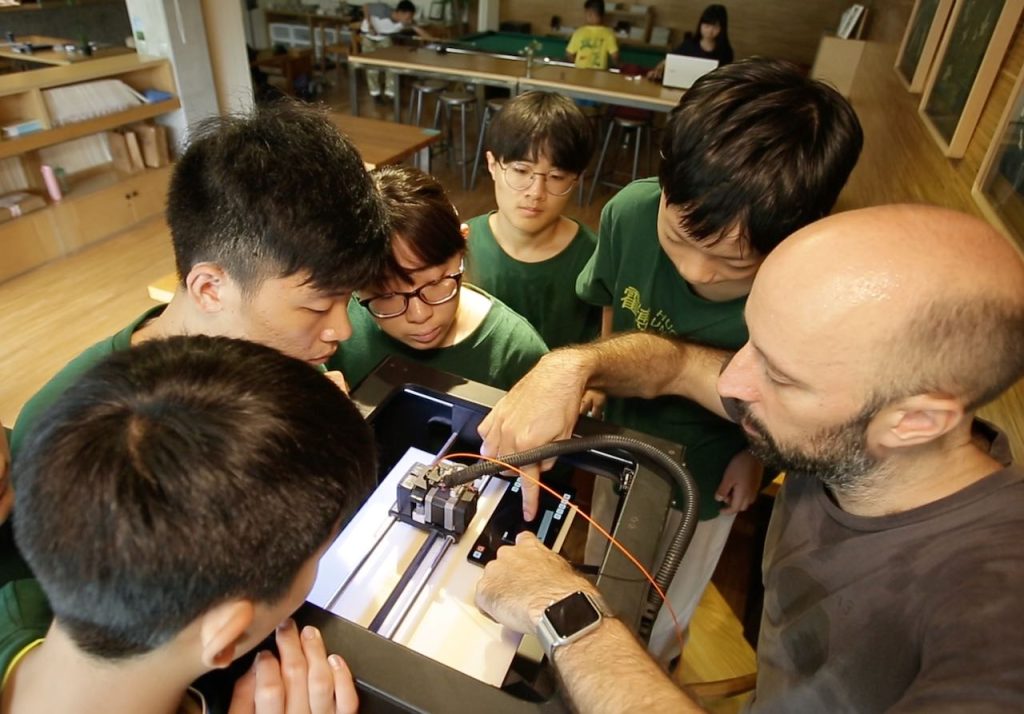
Summer school program conceived and facilitated by the House of Sciences apprenticeship board.
How to Make Internships Actually Work: A Simple Guide
The Big Idea: Making Thinking „Visible“
In a typical apprenticeship (like learning to be a carpenter), you can see what the expert is doing with their hands. But in modern office work or tech, most of the „work“ happens inside someone’s head.
The goal of a great internship is to make that invisible thinking visible. Instead of just showing someone what to do, you show them how you think about the problem.
From the Sidelines to the Center
Think of an internship like joining a new club. You start on the sidelines, watching how everyone talks and works. Slowly, you get passed the ball. Eventually, you’re a key player. This isn’t just about learning a skill; it’s about becoming part of the professional „family.“
Six Secrets to Success
1. Watch, Help, then Do (Training Wheels)
Learning works best in three steps:
- Modeling: The intern watches the pro do it.
- Scaffolding: The pro helps the intern do it (like training wheels on a bike).
- Fading: The pro steps back and lets the intern fly solo.
2. Give Them Real Work
No one learns anything by just getting coffee or filing papers. Interns need to work on projects that actually matter. Real-world „messiness“ is where the best learning happens.
3. The Mentor is the Key
An internship is only as good as the mentor. A great mentor isn’t just a boss; they are a coach who shares their „secret sauce“ for how to handle tricky situations.
4. Start Small, Grow Big
Don’t throw someone into the deep end on day one. Start with simple tasks to build confidence, then slowly turn up the heat. Think of it like a video game: you don’t fight the „Final Boss“ until you’ve cleared Level 1.
5. Don’t Just Do It, Talk About It
Doing the work is only half the battle. To really „get it,“ the intern needs to stop and ask: „Why did I do it that way? What would I do differently next time?“ If you don’t stop to reflect, the lessons don’t stick.
6. Focus on „People Skills“
Technical skills are great, but knowing how to talk to a team, solve a disagreement, and manage your time is what actually gets people hired. These „human skills“ are the most valuable things an intern can take home.
A great internship isn’t an accident—it’s a plan. It’s the difference between „hanging out at an office“ and actually „learning a career.“ When you combine a good coach, real tasks, and a bit of reflection, everyone wins.